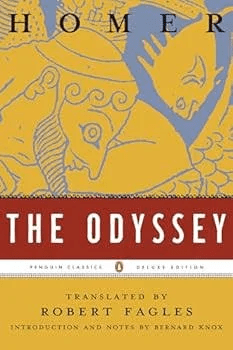
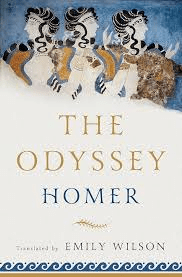
The Odyssey is the tale of perhaps the most famous liar in history. There are dozens of translations, multiple movies, a graphic novel, and even a musical. It’s a story over 2,700 years old, and it’s clearly stood the test of time. Which translation is truly the perfect Odyssey, as written by Homer? And why is more than one translation necessary to understand The Odyssey? Because there is no single wholly accurate translation. Emily Wilson, for instance, in her 2017 translation, focuses on accessibility for the modern reader, but in doing so, she sacrifices the lyrical poetry that Robert Fagles used in his 1996 translation.
Each translation uses different imagery and tone of voice, right down to the punctuation. For example, I noticed that Richmond Lattimore’s 1965 translation uses ellipses liberally throughout the epic, at the end of almost every description or action. I believe the intended effect of this grammatical choice was to add a sense of mystery to the translation–but I perceived these ellipses more as a vague sense of incompleteness in the writing.
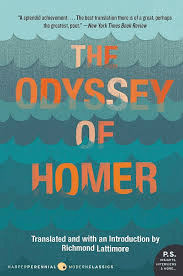
Likewise, each translation also approaches concrete nouns differently, which can result in wildly different symbolic interpretations of the text. In Wilson and Lattimore, Athena is described as a vulture, a bird associated primarily with death. Perhaps this choice is foreshadowing the bloody massacre of the suitors later on in the epic. But in Robert Fitzgerald’s 1961 translation she is a seahawk, in Fagles an eagle. Eagles are typically tied to Zeus, Athena’s father and the king of the gods, whom she’s allied with from the very beginning of the tale. The common denominator here is that each bird has the quality of cleverness attributed to them. In almost every translation, Athena is described and recognized by her bright, gray, clever, stormy eyes. Her eyes are her hallmark. My favorite version of this passage is Fagles, because he uses such poetic language in a way that’s not too archaic, and doesn’t stray into modern language. And I really enjoy his play on birds with his choice of verbs: “winged away” (Book 3, Lines 15-16)
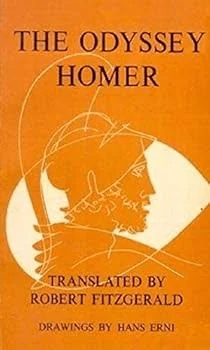
And each translation offers a different perspective on the main character. As modern readers, we understand Odysseus’s character through the lenses of these different translations. In Book 24, Robert Fagles writes: “‘The whole tale,’ his crafty son replied, ‘I’ll tell you start to finish” (338-339, p. 477). In this translation, Odysseus is more often than not described with the epithet “crafty.” Word choices can shape so much of our understanding of stories, and another translator, Fitzgerald, makes an interesting one: “Again Odysseus had a fable ready. ‘Yes,’ he said, ‘I can tell you all these things.’” (Book 24, 332-333) Fitzgerald calls Odysseus’ fabricated backstory a fable instead of a lie—curious how one word can change the tone of a sentence. Richmond Lattimore chooses to display that while Odysseus is without question a liar, he’s still quite clever: “Then resourceful Odysseus spoke in turn and answered him: ‘See, I will accurately answer all that you ask me.’” (Book 24, 302-303) In her translation, Wilson made the overarching choice to simplify Homer’s original language for the modern reader, and so her writing is plainer and to the point: “Lying Odysseus replied, ‘I will tell you the truth completely.’” (Book 24, 303-304) These words are perhaps the most perfect summary of Odysseus’s character throughout the epic. The fact that Odysseus lies so much calls into question whether he’s really a good person. He’s almost certainly an unreliable narrator. But where does this idea come from? The translators, at least in part.
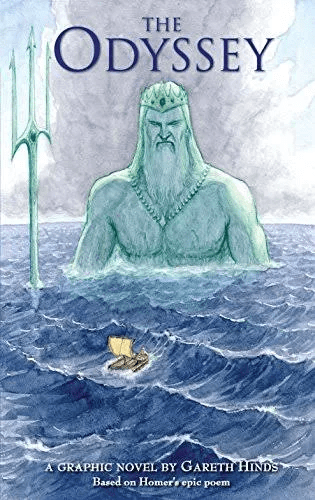
Even though I appreciate Wilson’s clear and concise characterization, I absolutely feel that I made the right choice in reading Fagles in its entirety. I originally chose the Fagles translation because I appreciate lyrical language and associate that kind of poetic writing with older texts, something I didn’t find in Wilson’s, for example. The only version of The Odyssey that I’d never recommend to someone who wants to fully understand the poem is the graphic novel by Gareth Hinds. There’s so much language and many important scenes lost to this format, though it’s understandable that Hinds had to cut down 24 books to fit into one graphic novel. The illustrations are beautiful, but so much is missing from the story that I can’t recommend it to read by itself.
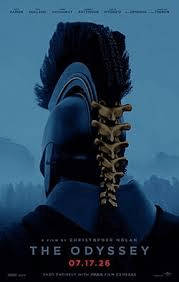
However, without having compared multiple passages from the different translations, I wouldn’t have had the understanding of The Odyssey I have now. It’s an incredibly complex story, and at the heart of it is Odysseus, whom Wilson described perfectly in her first line “Muse, tell me about a complicated man.” The ideal Odyssey is, of course, Homer’s Ancient Greek text. But the next best thing is to read multiple versions. Having not read the original Odyssey as Homer wrote it 2,700 years ago, I cannot say which translation is the most accurate. But I can say that reading multiple translations is as close as you can get. And I’m looking forward to the next translation, coming in the form of the summer 2026 movie directed by Christopher Nolan.


 Cabinet of Curiosities
Leave a comment