This blog post is the first of a new series I’m beginning: “Five Questions With,” in which I will interview various teachers, family members, and peers.
For this first post, I wanted to interview the other person I know with a blog, my grandfather, Mark Sherouse.
For as long as I can remember, my grandparents have traveled. They’ve sent me postcards from Montana to Paris to New Zealand and Africa, and my grandfather has documented every step of the way with his blog, The Road Goes Ever On. And I would highly recommend checking it out, as it’s full of humor and opportunities to learn about the places they’ve been.
We had a conversation over Zoom, since my grandparents are in Paris right now, and then my grandfather followed up with some written comments as well. Hope you enjoy getting to know my first interview subject!
Question #1: What’s something you wanted to be when you were my age, and how close or far is that from where you ended up?
Mark/Grandpa: Let’s see, your age is 15…that was, like…sophomore year. 10th grade, 10th grade. Going into 10th grade. Okay, I think by 10th grade, I had passed through wanting to be a jet pilot, a cowboy, or a musician, I really wanted to be a classical musician. But I think by 10th grade I was really focused on being in medicine. Being a doctor and doing medical research.
There was a thing called the Heart Association Fellowship. And the Heart Association is a big national organization, but anyway, in Miami they funded a couple of fellowships wherein a kid from high school could go and work in a real medical research lab. And for the summer, and get actual paid money, $300, which at the time was, you know, like a fortune. (Don’t ask me how I got this award–I guess I’ve always been pretty good at writing entries to contests.)
But anyway, I got one, and I went and worked at the Howard Hughes Medical Institute, at the University of Miami, which was at the Jackson Memorial hospital campus, which is where I was born, where also your grandmother was born a year later.
So I worked at the Howard Hughes Medical Institute with, uh, the professor or doctor in charge. Her name was Nancy Noble. And I spent the summer working on a project which was published in a publication… well, okay, I don’t know that it was ever published, but…it was issued in a writing by me called, “A study of mucopolysaccharide synthesis at the cell particle level.”
But the most memorable, magical moment in terms of all of this but something quite different, actually. I had, at this point, discovered the Miami Public Library downtown, which was, you know, for me, a humongous library. And I checked out a bunch of works, and one day, I was supposed to be watching the centrifuge, or something like that. And instead I was reading some book I checked out from the library, and Dr. Noble came in and yelled at me about it.
And I think that was the moment where it was discovered–where it was revealed–that I was not going to be a scientist.
Question #2: Is there a book that changed how you see the world?
Mark/Grandpa: Quite a few…I’m nearly 80 years old and have read a lot of books, especially philosophy books that pretty directly address questions of world view.
John Dupre’s The Disunity of Science is perhaps the most recent, not for its major thesis but for the range of dogma it challenged. It came out in the 80s or 90s, and I taught a graduate course from it at SMU. (Teaching a text is vastly different from merely reading it.)
Another, way further back in my life, was a book assigned in 10th or 11th grade English whose exact title I cannot remember. (But I still have a copy of it). Something like Twelve [15? 20?] Books That Changed the World. I have no idea what the teacher thought this had to do with English, but we read about Malthus, Adam Smith, Darwin, Harvey, Mahan, and many others…and my growing convictions about the importance of books were much confirmed.
Another, from the same era, was Robert Ardrey’s African Genesis. I had a Latin teacher, Mrs. Vivian Henry, among the first intellectuals I knew, who had great difficulty staying focused on declensions and conjugations…she would wax eloquently on Catullus’ poetry (not age appropriate) but also on questions of human nature and origins…which is where Ardrey’s famous book comes in. I assume I was among hundreds of thousands of readers in the early 1960s whose simplistic Christian world view was completely undermined.
Lastly, I’d mention Richard Halliburton’s Book of Marvels, given to me when I was perhaps twelve years old by a neighbor, Mr. Clifford Way. (He figures in other parts of my life). Perusing this big illustrated book planted in me a sense of history and of the importance of history for understanding the present…and future. I still have this book, probably the most battered one in my library. Similarly, about the same time, my parents gave me an illustrated history of the US, which had a similar though more limited effect.
Question #3: What’s a skill you use every day that you never expected to need?
Mark/Grandpa: I took lots of crummy photographs in the first 60 years of my life. Just prior to retiring, however, I took a few courses (Grandma’s idea, of course) in photography, digital photography, and landscape photography. I had never imagined having nor using such skills as I picked up in these courses, and subsequently. Especially as I travel, and blog, I use these skills very nearly every day…framing, setting, focusing, shooting, editing, refining, posting, commenting…. It’s a constant routine I had never thought much about before 2008.
Question #4: What’s the best collaboration you’ve ever been part of, and what made it work?
Mark/Grandpa: Several come to mind, mostly from professional life. In 1992, President George H. W. Bush was scheduled to be SMU’s commencement speaker. I was Vice Provost of the University at the time, and, when I got a call indicating I was to be the University’s lead, I thought it was a practical joke. It was not, and I had six weeks to re-design SMU’s commencement to accommodate the speaker and his entourage. I had never done a big event before. Nothing is bigger than an event involving the President of the United States, and it came at an important time in SMU’s tarnished but recovering history.
I assembled a committee of twelve or so administrators, students, relevant faculty members, (commencement is a faculty thing and thus under the aegis of the provost, my boss), facilities people, financial people, the registrar, PR folks, the chief faculty marshal, et al.
My first injunction was “drop everything,” and we met many times in those weeks. Also involved were the White House Communications Agency and the US Secret Service. Despite any number of surprises and complications, it came off perfectly. Why? A group of people with common interests, common imperatives, common backgrounds…and a whole lot of communication, mostly from me. “Over-communication” is an expression I still use. That is how things work.
I lost ten pounds from stress during those six weeks, but came away with the conclusion that I really could do anything, administration-wise. You can read about it all: just Google “Hosting the Presidential Visit” by me. Oh, someday you (meaning me, Penelope) will inherit a commencement bulletin signed by President Bush, presidential cuff links, and assorted other memorabilia.
I could cite other large collaborative activities…a five-year master plan I headed up at the Ohio Board of Regents, an academic master plan at SMU, SMU’s re-accreditation self-study, and creating and running the annual Montana Festival of the Book. And yes, communication—even over-communication—largely determined the extent of success of each.
Question #5: What’s one thing you’d put in your Cabinet of Curiosities?
I don’t have a cabinet of curiosities, but if I did, one item to go into it would be a first edition copy of Houston Stewart Chamberlain’s 1894 biography Richard Wagner. I picked it up in 2011 in Bavaria, at a large flea market, for 25 euros, as I recall. This blog post recounts the event.
The book is a real curiosity. Houston Stewart Chamberlain was the son of a British admiral, raised in France, converted to Wagnerism, became a German subject, and worst, became a leading theoretician of what became Naziism. I am almost ashamed to own the book, except that it is in such fine condition and is a major instance of intellectual history. Intellectual history gone very wrong.
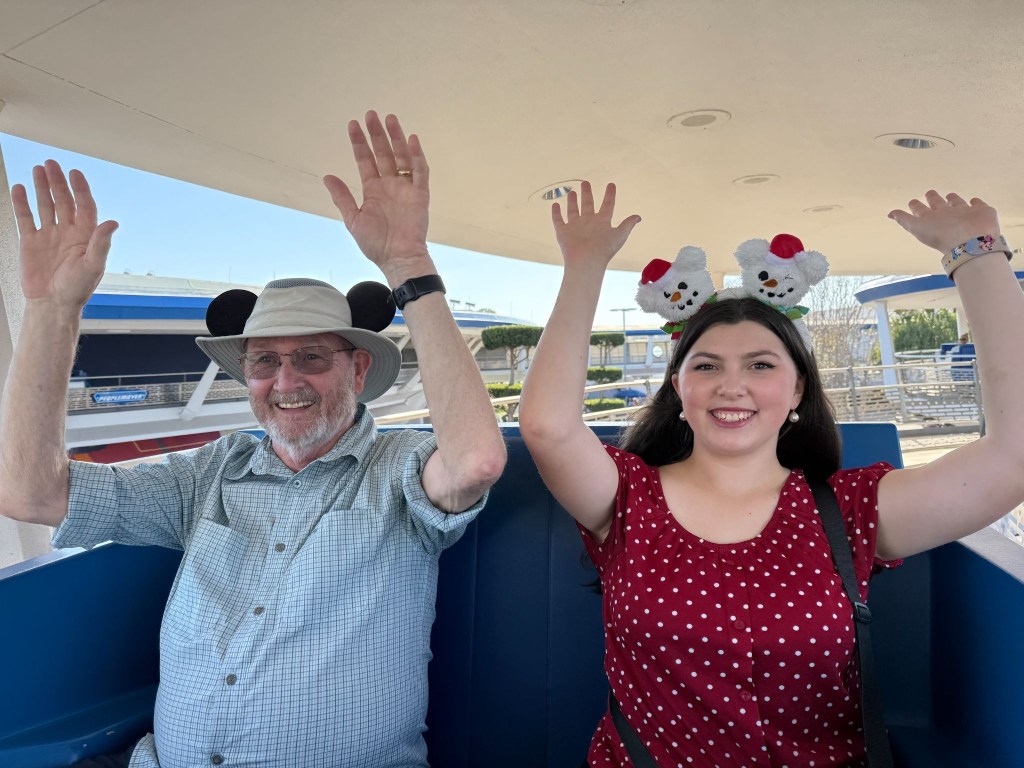
We had a recorded conversation over Zoom, since my grandparents are in Paris right now, and then my grandfather followed up with some written comments as well. I hope you enjoyed getting to know my first interview subject!


Leave a Reply