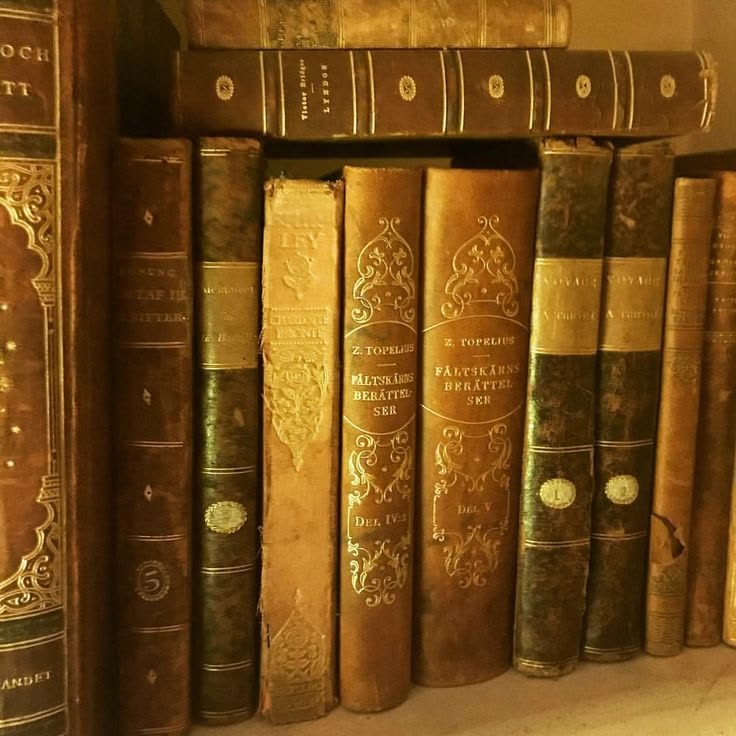
5th & 6th grade
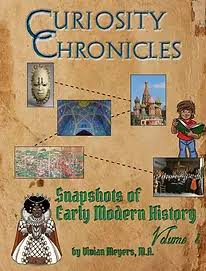
During middle school, we went through many different eras of historical studies: Ancient History, Medieval, and Early Modern History (so, prehistoric era – 1848).
My main textbooks for these years were the Curiosity Chronicles curriculum, and what made them different from a normal textbook was that they were in an interesting format: prewritten discussions between fictional kids who were studying these historical time periods. I’d read one part, my mom would read the other, or we would sometimes listen to a recorded version of the conversation and read along in the text.
Part of the Curiosity Chronicles coursework was constructing a historical timeline, pictured below. It was a really cool way of showing how close global events were, at least time-wise.
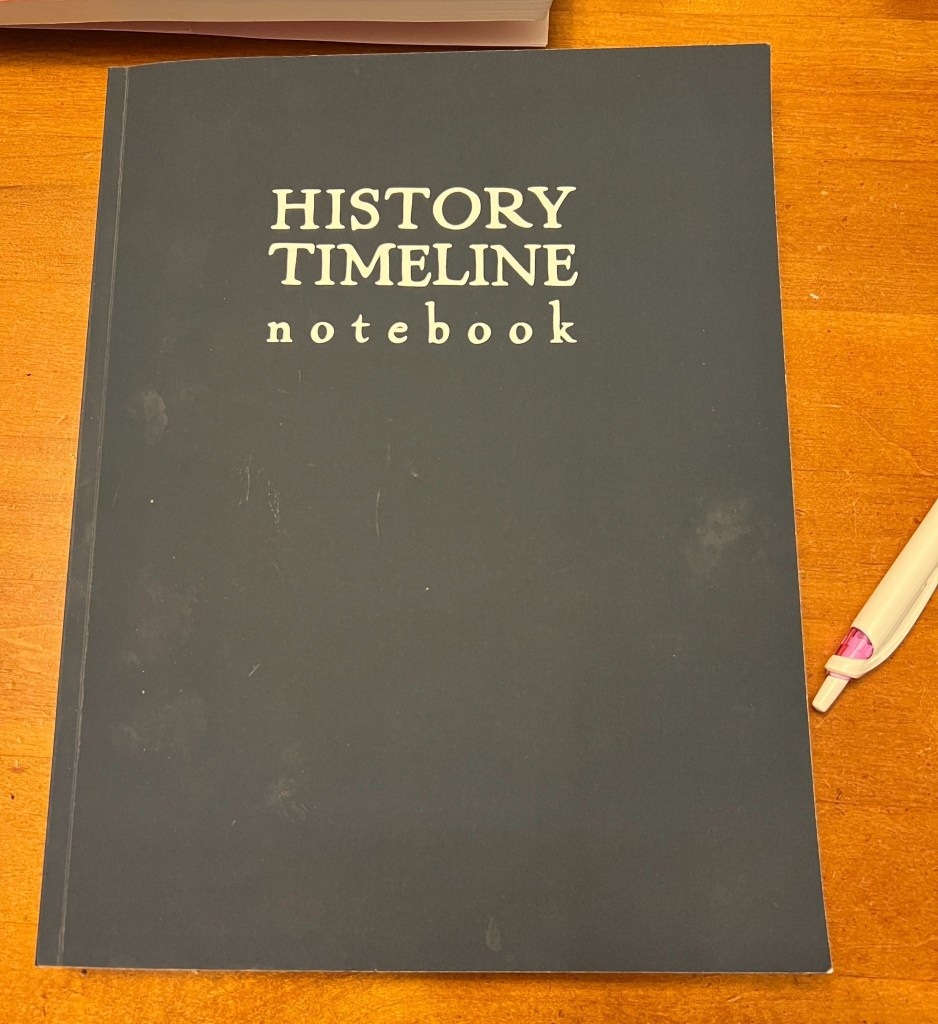
My timeline notebook, which I used during both years.
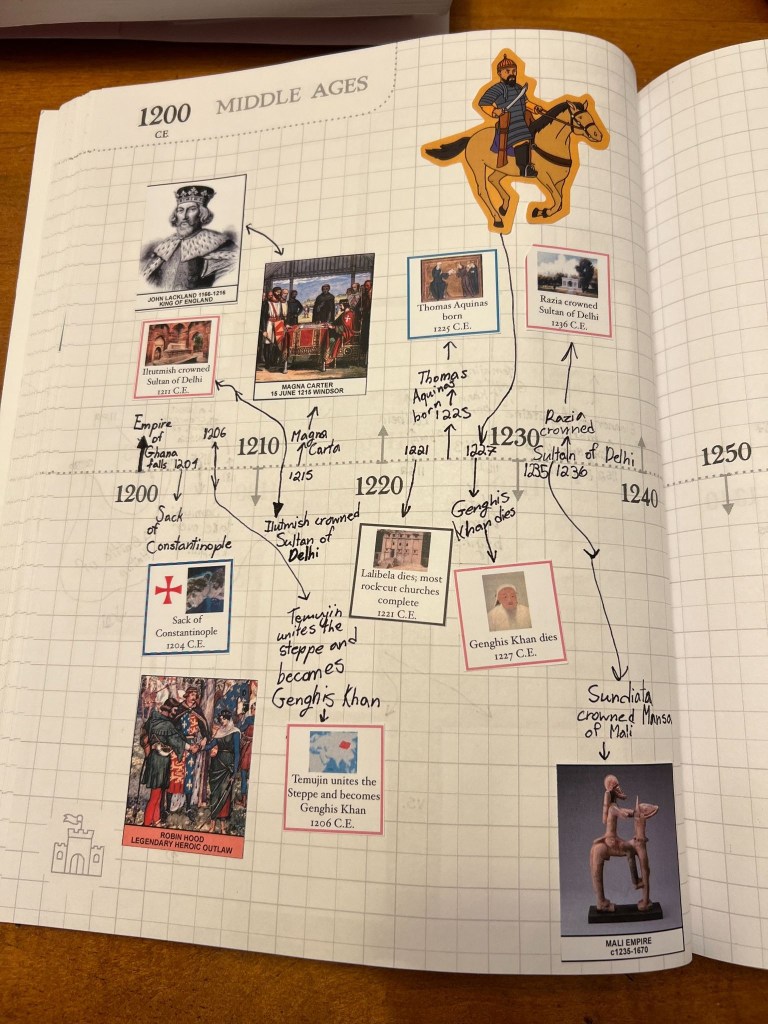
A peek into the Middle Ages.
7th & 8th grade
In my last two years of middle school, we decided to focus on American history. (I have since learned that my parents just like to hurt me challenge me academically, and it was, in fact, not required.) It’s no shock to those who know me well that I don’t like American history very much. Unless, and that’s a big unless it covers: a) The Roaring Twenties, b) World War II, or c) basically anything after the 1920s. Everything before that is like the setup in a murder mystery movie: it’s necessary to know, just not particularly interesting.
It didn’t help that my textbook for my middle school foray into American history, Land of Hope, was not one of the most interesting, at least to a 12-13 year old me who already disliked American history to begin with. My memories of the textbook are mildly clouded by my irritation when—horror of horrors—we had to keep pausing the audiobook version of the textbook we were using—for discussions. Beyond Land of Hope, we also used Crash Course US History videos, which I adored—Crash Course is one of my favorite educational channels out there, because they do a great job of explaining things clearly while still being entertaining. Beyond textbooks and videos, I read almost 100 historical fiction novels over the course of the year, a part of the course I really enjoyed.
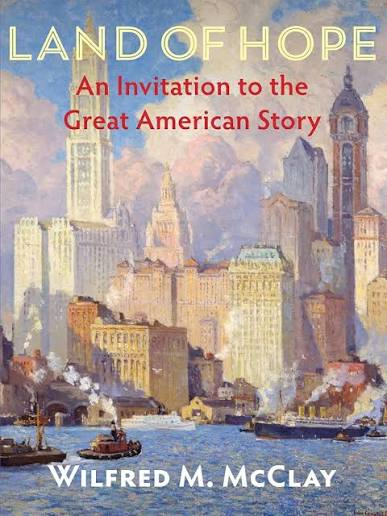
The dreaded textbook (which I remember as being well-written but also I have learned recently was aimed at high school juniors)
But the Crash Course series was excellent. Highly recommend!
To further my understanding of American history, we watched many documentaries; the one I remember the best might be Ken Burns Presents the West, which we jokingly dubbed Ken Burns the West (subtitle; he Burns it all down.)
At the beginning of my American history journey, I was absolute in my hatred of this history. But reading historical fiction novels and watching the Crash Course videos made me appreciate it a lot more, and I have a lot more respect for it now than I did three years ago. That being said, I’m taking American history again in high school as required, and I can’t say I’m overly excited for it. However! There is merit to learning about the country I am from, and by finding what parts of its history really interest me, I can deepen my connections to my home.
One of the best parts of my middle school American history journey was taking trips with my family to Williamsburg, Jamestown, Monticello, & Washington DC. It was so interesting seeing the places I’d been learning about, and naturally they were very much educational trips.
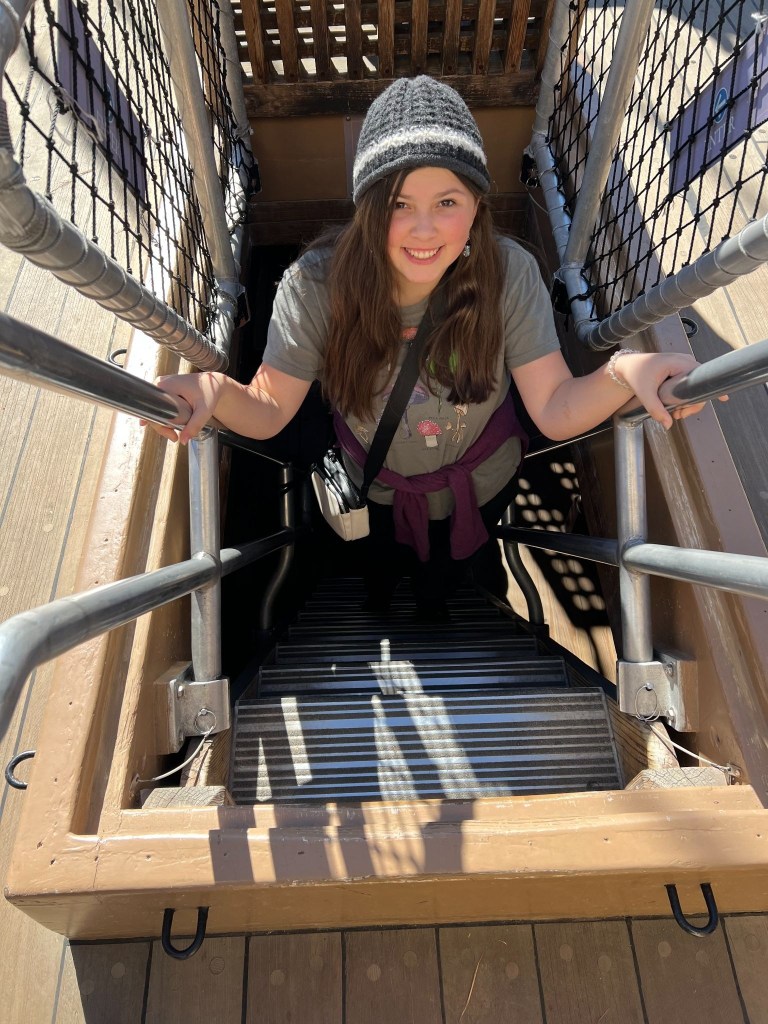
Exploring one the ships at the Jamestown settlement
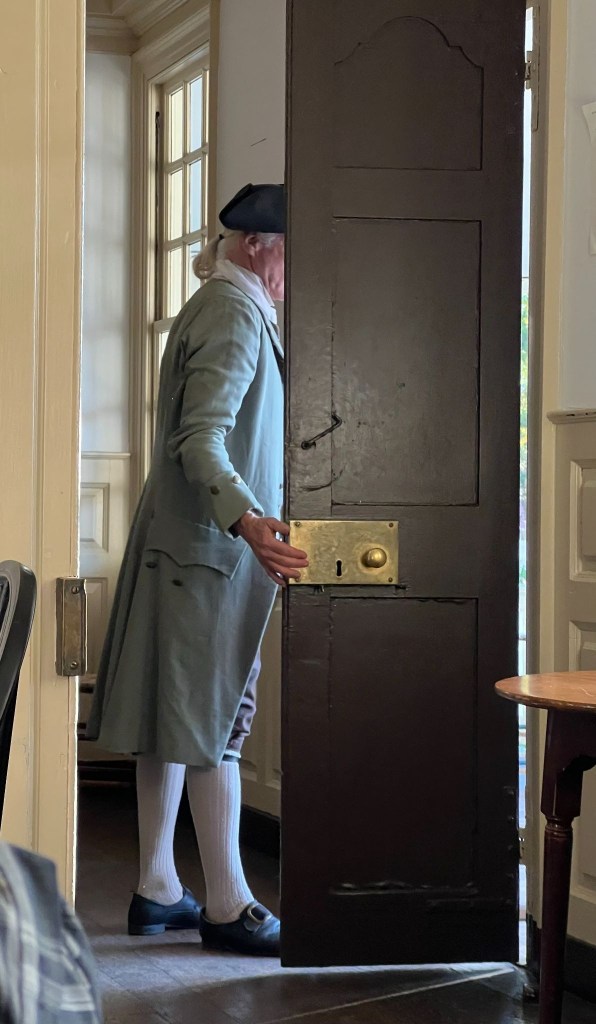
A glimpse of one of the workers at Williamsburg
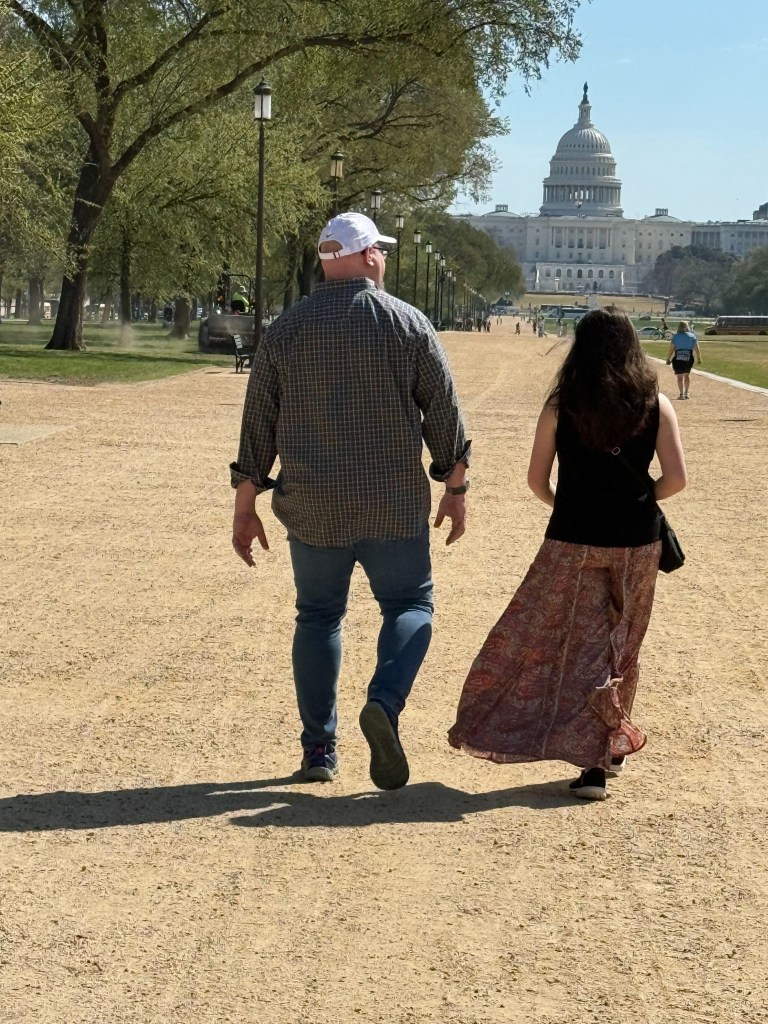
Walking down the Mall in DC, in front of the Capitol Building
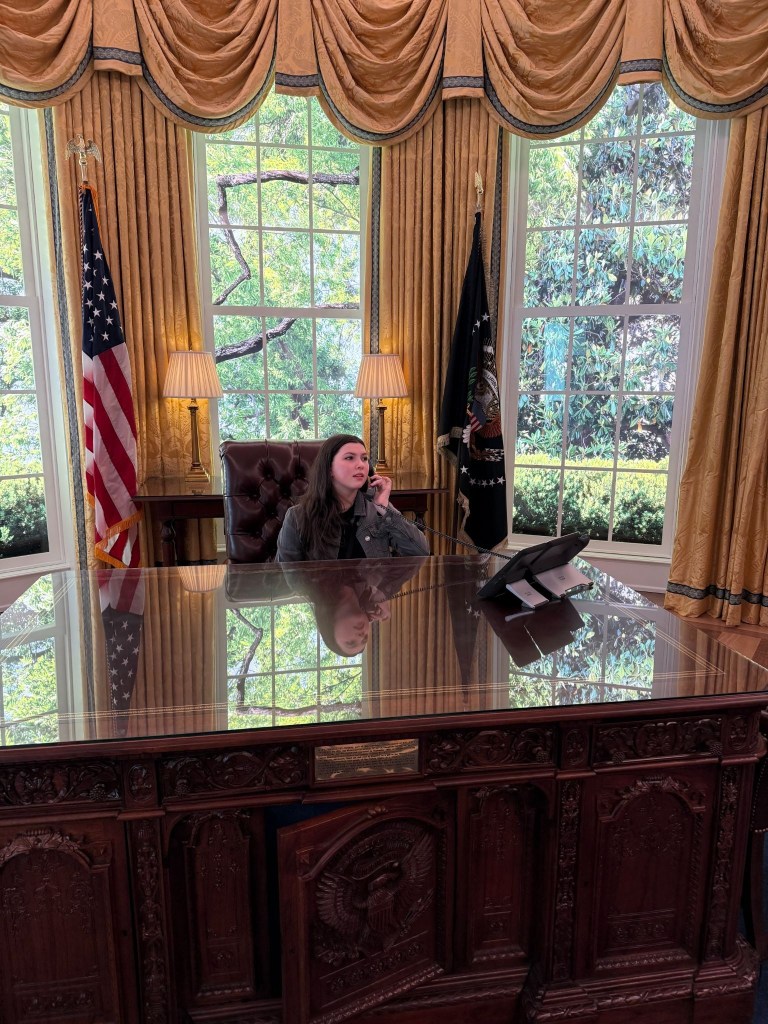
Sitting at the President’s desk in the Oval Office at the White House Museum
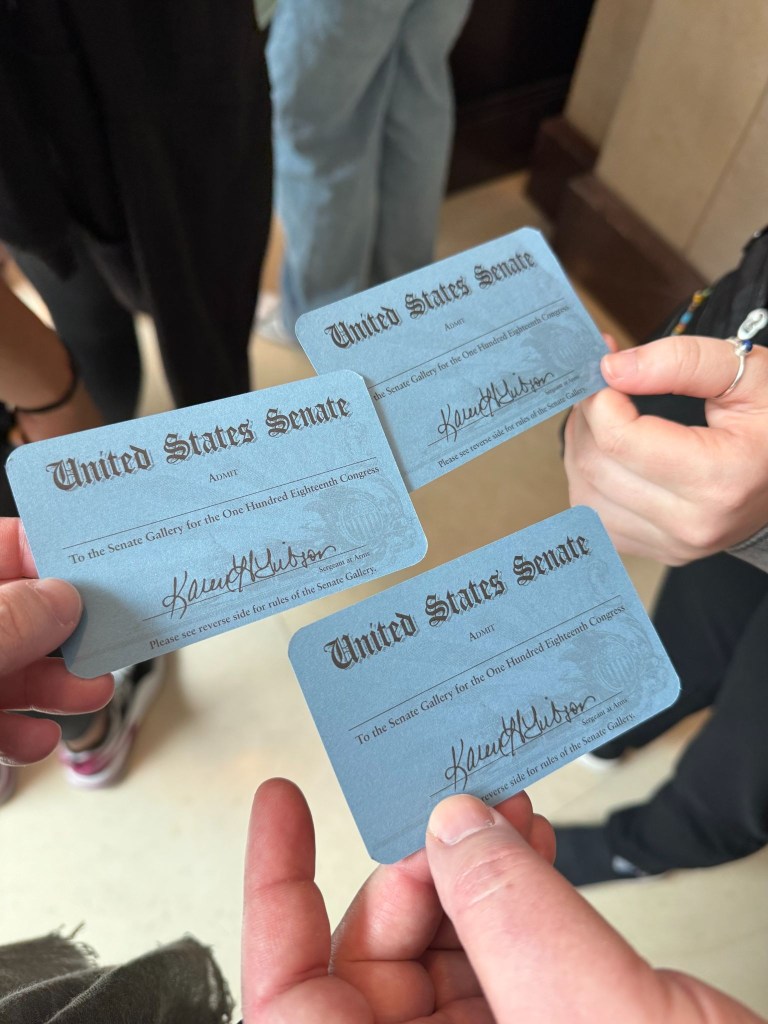
Our passes to see the US Senate in action, after a terrific tour by our NC senator’s office.
9th grade
For my freshman year of high school, we decided to take a somewhat different approach to the basic history courses of years past. I took an online World Geography class with historical elements, and two courses in the history of music: classical in the fall, rock & roll in the spring. It was great to have the experience of a more unconventional history curriculum, but I found that I missed the more typical approach.
Previous blog posts about all three courses can be found in the entries linked above!
10th grade
This year, we’re taking a more traditional approach to the content I’m learning for World History—with a twist on how I’m learning it.
I’m using the Nomadic Professor curriculum, designed by a professor and a high school teacher who wanted to make history more accessible and engaging for homeschoolers. Like many of my other courses this year, it’s entirely online, but asynchronous. What’s really cool about their program, and what sets it apart from a typical online course, is that the videos are filmed on site, meaning Dr. W. Kesler Jackson, who is the main onscreen teacher, films the videos embedded in the text in the place he’s talking about: Egypt, Scotland, Kenya, India, etc. Being able to see my teacher actually in the location he’s talking about is so grounding as opposed to reading about a place I’ve never been and trying to imagine its scale.
The workload for this course is incredibly customizable: a blessing and a curse for someone like me, who genuinely enjoys history and wants to do every kind of assignment because I find value in each one. I’ve had to make choices after discovering that it’s actually not very time-effective to do everything the Nomadic Professor offers, but it’s been wonderful to have that kind of freedom.
The capstone project for this course is unlike any other I’ve created: a museum exhibit! It’s a fully curated, designed, and meticulously organized digital or physical (depending on student preference) wing of a museum that each student can customize to their heart’s content. For instance, I could create a museum exhibit on a very specific topic, like Genghis Khan and the Mongols, take a wider deep-dive into religious texts throughout history, or examine jewelry as symbols of power in a particular time period or culture. Anything I’ve learned about in the course is fair game, and there are even suggested artifacts that pop up from time to time in the text.
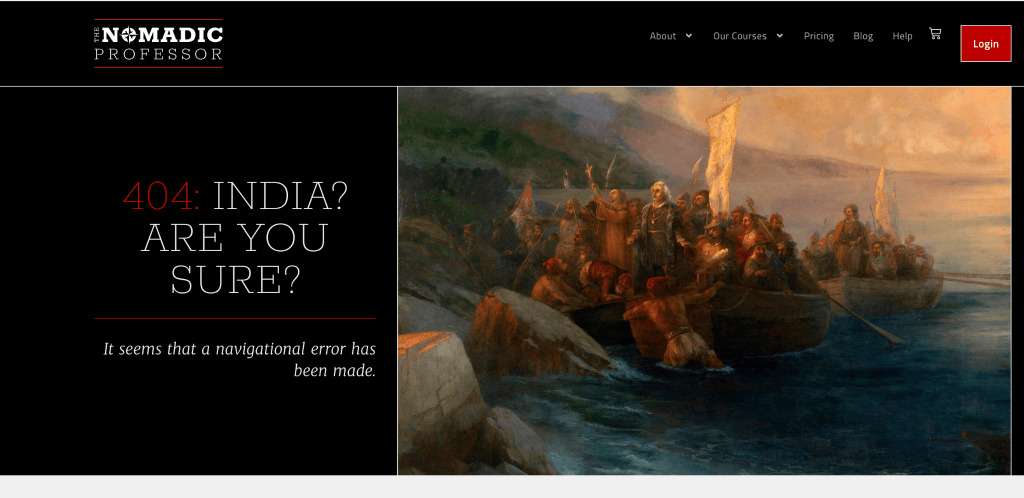
I also really love The Nomadic Professor’s sense of humor: 404 error page
History has always been one of my favorite subjects because it has so many facets. It can be learned through music, through art, through the written word, and through people. History is the subject that I would argue is the most connected to humanity, and our deeply rooted desire to know about the humans that came before us.


Leave a Reply